• A
  • A
  • A
  • ABC
  • ABC
  • ABC
  • А
  • А
  • А
  • А
  • А
Regular version of the site
Book
Essays on Topology Dedicated to Valentin Poénaru

Akhmet’ev P.

Switzerland: Springer, 2025.

Article
On the construction of Barnes–Wall lattices and their application in cryptography

Kuninets A., Malygina E., Leevik A. G. et al.

Journal of Computer Virology and Hacking Techniques. 2026. No. 22.

Book chapter
On the Electro-Hydrodynamical Boundary Value Problem for the Unit Cell of Cation-Exchange Membrane

Yulia O. Koroleva, Alexander V. Korolev.

In bk.: Proceedings of the 9th International School-Seminar on Nonlinear Analysis and Extremal Problems (NLA-2026). Irkutsk, Russia, June 22–26, 2026.. Irkutsk: ISDCT SB RAS, 2026. P. 132-133.

Working paper
New bound on S1× S2-setting Bell locality of a nonseparable Werner state

Loubenets E. R.

quant-ph. arxiv.org. Cornell University, 2026. No. 2607.18050.

Research & Expertise – News

Scientists Model How Interactions Between Societies Can Trigger Chaotic Behaviour

Scientists Model How Interactions Between Societies Can Trigger Chaotic Behaviour
Scientists at HSE MIEM have proposed a mathematical model explaining how interactions between societies can influence their stability. Based on the classical theory of evolutionary games, the study reveals an unexpected effect: even a weak informational influence of one society on another can cause one society to remain stable while the other exhibits chaotic behaviour among its individual members. The study has been published in the International Journal of Bifurcation and Chaos.

Applications Open for Student Research Paper Competition 2025

Applications Open for Student Research Paper Competition 2025
The annual Student Research Paper Competition (SRPC) offers students the chance to showcase their work, such as term papers or theses. It is a valuable opportunity to receive expert feedback and recommendations aimed at improving research, as well as to take the first steps in an academic career. Below we outline the key features and deadlines for submitting entries.

Leap Second: How Chinese Dam Affects Planet Rotation Speed

Three Gorges Dam in China
Researchers predict that this summer, the planet may once again approach its maximum rotation speed. The causes of this acceleration are not fully understood, and there is still no definitive scientific explanation. Leonid Zotov, Professor at the School of Applied Mathematics, MIEM HSE, notes that if, in the past, the so-called ‘leap second’ was added on New Year’s Eve, then for the first time in history, the question has arisen about whether it is time to subtract one.

HSE Scientist Optimises Solution of Hydrodynamics Problems

HSE Scientist Optimises Solution of Hydrodynamics Problems
Roman Gaydukov, Associate Professor at the MIEM HSE School of Applied Mathematics, has modelled the fluid flow around a rotating disk with small surface irregularities. His solution allows for predicting fluid flow behaviour without the need for powerful supercomputers. The results have been published in Russian Journal of Mathematical Physics.

Researchers Propose Method to Increase Charge of Supercapacitors

Researchers Propose Method to Increase Charge of Supercapacitors
Researchers from HSE MIEM and the Institute of Non-Classical Chemistry in Leipzig have proposed a new theoretical model of supercapacitors that takes into account the properties of a cation, which considerably impacts the electric differential capacitance of supercapacitors. This is the first publication of its kind in electrochemistry. The authors believe that the model will allow engineers to create more powerful energy sources in the future. The results of the study were published in The Journal of Physical Chemistry C. The study was completed with support from a grant by RSF.

HSE University Creates the Viral Genealogy Simulator to Model the Spread of COVID-19

HSE University Creates the Viral Genealogy Simulator to Model the Spread of COVID-19
Researchers of HSE Tikhonov Moscow Institute of Electronics and Mathematics (MIEM), in cooperation with their colleagues from the University of California, Santa Cruz (UCSC), and The European Bioinformatics Institute (EMBL-EBI), have developed software to model the spread of the COVID-19 global pandemic. This is the world’s fastest Viral Genealogy Simulator (VGsim). For more details about this scalable simulator, read the reprint on medRxiv. The code is freely available at GitHub.

HSE Maintains Its Position in Two THE Subject Rankings

HSE Maintains Its Position in Two THE Subject Rankings
HSE University has once again placed in two subject rankings of the Times Higher Education (THE) World University Rankings: Computer Science (in the top 400) and Engineering and Technology (in the 601-800 range).

MIEM HSE Researchers Present Newly Identified Features of Classical MC Algorithms at Workshop in Lausanne

A team of researchers of HSE University’s Tikhonov Moscow Institute of Electronics and Mathematics (Professor Lev Shchur, Assistant Professor Evgeny Burovsky, and doctoral student Maria Guskova), in collaboration with Prof. Wolfhard Janke (Leipzig University, Germany), has made a new discovery about the properties of classical Monte Carlo (MC) algorithms. The team identified an interesting connection between the properties of the algorithm used and the properties of statistical systems that are modeled using the algorithm. As it turns out, the acceptance rate in local Metropolis and heat-bath algorithms appear to be a linear function of internal energy of the used model. Moreover, the researchers were able to prove analytically that, for a one-dimensional (1D) Ising model, the acceptance rate of the Metropolis algorithm is a linear function of internal energy. This proved true not only for the thermodynamic limit, but for an arbitrary size of the system under study as well. A computational experiment demonstrated that, for all analyzed spin models with different types of interaction in any space dimensions, the linearity is performed around the phase transition point.

HSE’s Annual Student Research Paper Competition Now Open

HSE’s Annual Student Research Paper Competition Now Open
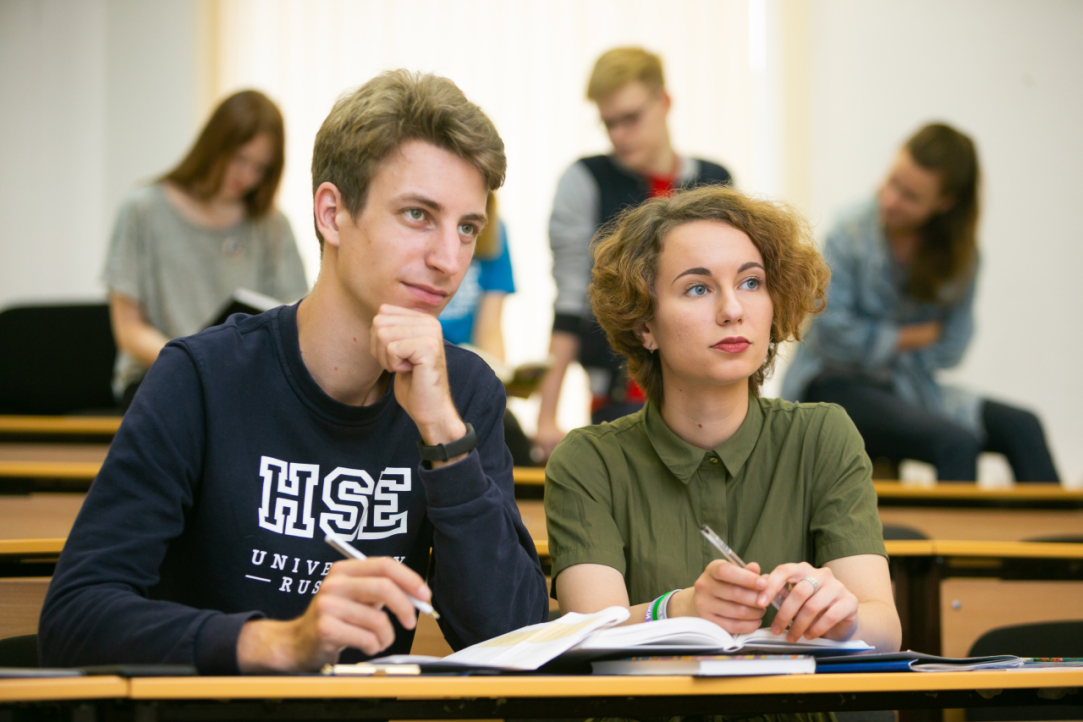
HSE’s annual student research paper competition has begun accepting applications for the 2019 cycle. The competition is open not only to students of HSE University but to students of any university, both in Russia and abroad. You can submit research papers in Russian or in English. The application deadline is October 15.

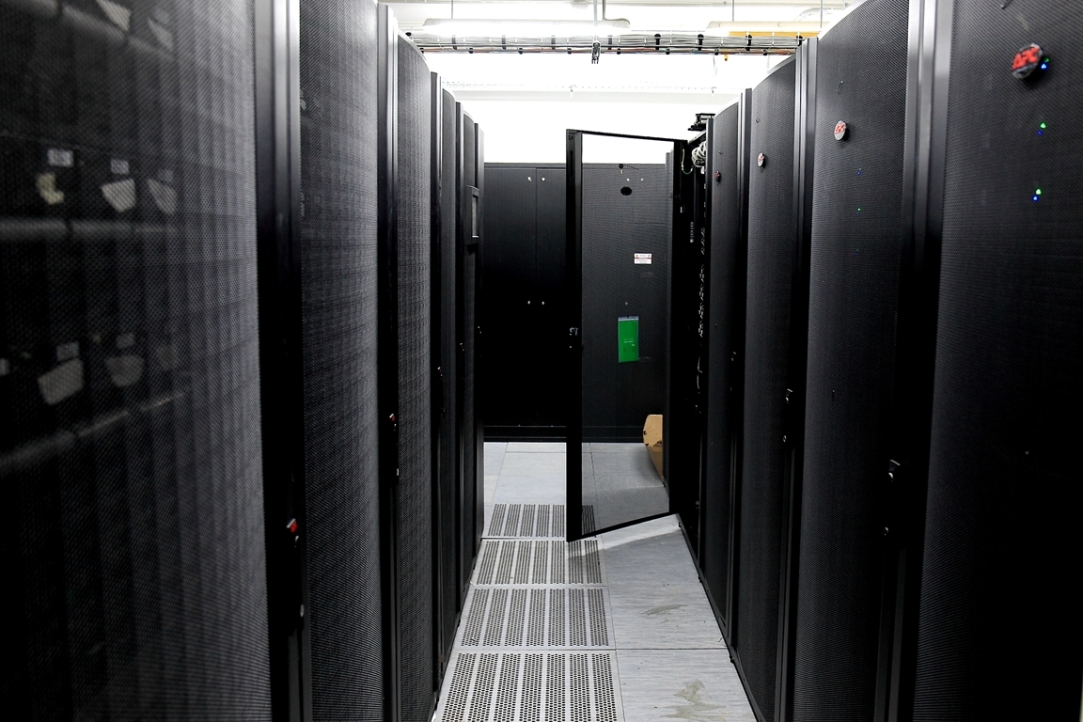
Supercomputer Set Up at HSE University

Supercomputer, HSE MIEM
A new supercomputer, which has been recently set up at MIEM, will allow the university to carry out high quality research in deep learning and mathematical modeling. The computer was ranked sixth in the April Top-50 ranking of supercomputers in Russia.
1 2